Pattern & Motif Analysis · Nursery Textiles
The Quilted Sheep: Reading Animal Motifs in Coyuchi Nursery Bedding
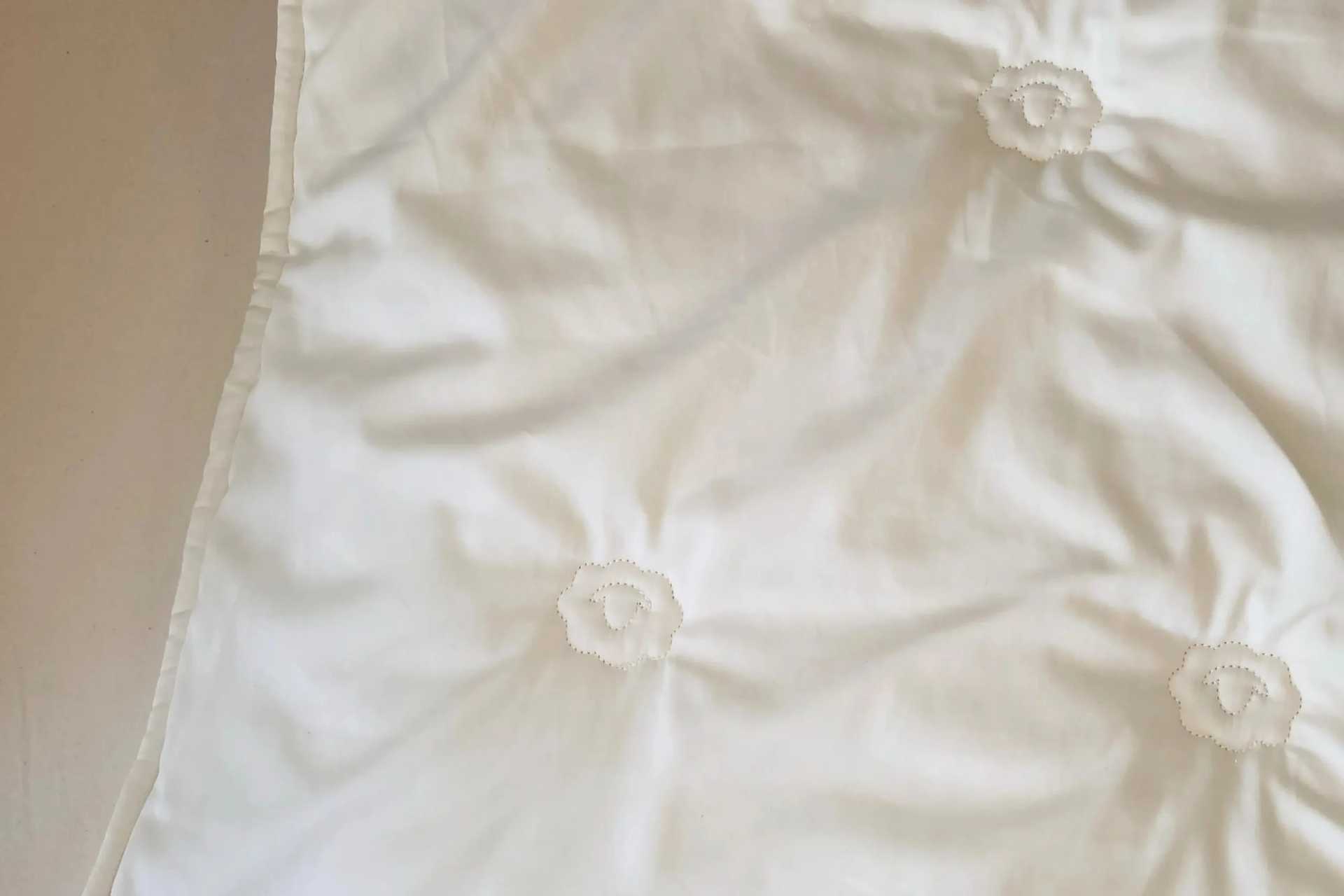
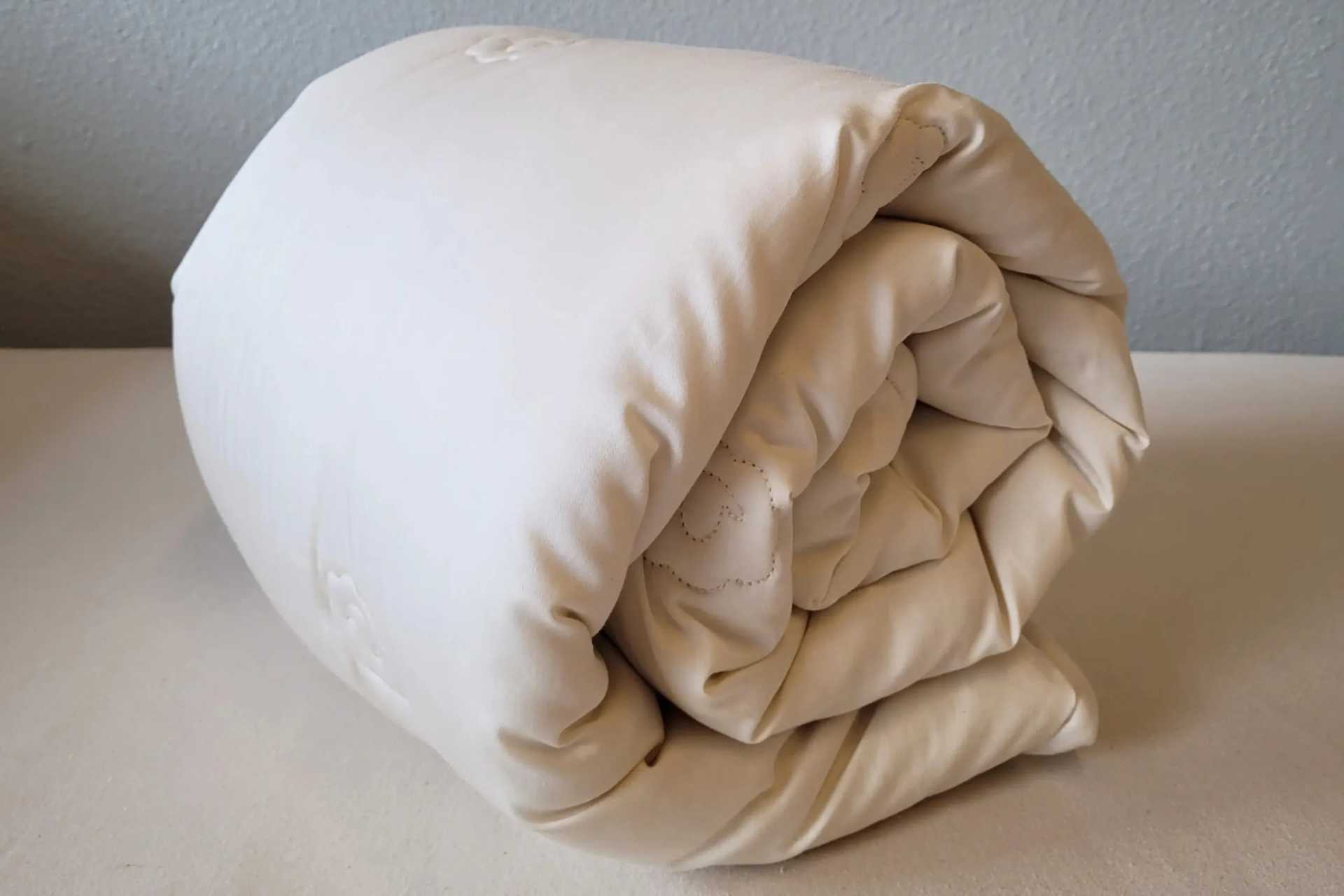
On a toddler comforter, a stitched sheep can be image, map and engineering at once. The 35-by-53-inch format makes that conjunction especially legible: quilting marks the animal while helping hold the wool batting in an even layer.
The sheep motif in Coyuchi nursery bedding belongs to a long visual vocabulary, but its significance here is not simply pastoral charm. Sheep are the source of wool, the material associated with the comforter’s warmth; when a sheep is rendered through quilting on a wool-filled textile, subject and substance meet unusually directly. The design asks to be read as both picture and making.
That double function offers a useful way into animal imagery in textiles. A motif may carry cultural associations—care, rural life, abundance, sleep—while also following the practical logic of a particular object. In this case, the outline of the animal is formed through construction rather than applied as a separate printed scene. The result sits somewhere between decoration and structure: it is an image whose lines participate in keeping the filling in place.
A sheep with a material history
Sheep have a particular place in textile history because the animal is not merely an emblem placed on cloth. Wool is a fiber obtained from the animal, processed and transformed into yarn, felt or batting. Across regions and centuries, sheep husbandry shaped systems of trade, land use and skilled work. The English wool trade, for example, helped support medieval markets and institutions; the importance of wool was visible in civic life as well as in the everyday fabric of clothing and bedding.
That history gives the sheep motif a specificity that a generic woodland animal does not possess. It points towards a material chain: flock, fleece, sorting, cleaning, spinning or felting, and the eventual textile. A nursery comforter compresses that chain into a small, intimate object. The sheep becomes a visual shorthand for the fiber inside, though the actual production of wool is far more complex than the soft, simplified figure suggests.
The image also draws on pastoral imagery: the idealized countryside of fields, flocks and seasonal rhythms. Pastoral conventions appear in European literature, painting and decorative arts, often translating agricultural life into scenes of leisure or harmony. A quilted sheep is not itself a full pastoral landscape. It is a distilled sign, one animal standing in for a larger imaginative setting—open land, quiet, care and a slower relation to materials.
That distinction matters. The sheep on a toddler comforter should not be treated as documentary evidence of farming practice, nor as a transparent account of where a textile’s wool came from. Motif and provenance are different kinds of information. A sheep image can reference wool culture, while fiber origin and processing need to be established through product documentation, sourcing records or certification.
From pastoral symbol to nursery image
In nursery design, animals often occupy a space between decoration and reassurance. The lamb or sheep is readily associated with gentleness, but that association is culturally learned rather than universal or inevitable. It is reinforced by familiar language, children’s stories, toys and the repeated presence of sheep in imagery about sleep. The phrase “counting sheep,” for instance, has made the animal an enduring companion to the idea of falling asleep, even though its precise origins are difficult to establish.
The sheep also carries religious and heraldic histories that complicate its apparent simplicity. In Christian iconography, the lamb can signify innocence, sacrifice and the figure of Christ; the Agnus Dei, or Lamb of God, is a long-standing devotional image. In heraldry, sheep and lambs can appear as charges, sometimes connected to local economies or religious symbolism. These references are not automatically present in a nursery motif, but they form part of the wider archive through which viewers have learned to read the animal.
A design analysis should therefore avoid flattening the sheep into “cute.” It can ask which associations the form activates, which it leaves aside, and how the textile’s use changes the reading. The comforter’s domestic setting favors intimacy over ceremony: the sheep is close to the body, encountered at rest, and repeated through the tactile language of stitching. It is less a heraldic emblem than a companionable figure, but its cultural meanings remain layered beneath that first impression.
The nursery context also changes scale. On a large tapestry, a flock might become landscape, labor or social allegory. On a toddler comforter, one sheep—or a small group of them—can be read at close range. A child may encounter the stitched contour through touch before identifying the whole figure visually. The motif is thus not only viewed; it is handled, folded and lived with.
When quilting draws the picture
Quilting is the process of joining layers, commonly a face fabric, filling and backing, with stitches that secure them together. Its familiar visual language includes grids, channels, medallions and all-over patterns, but quilting can also trace figurative forms. When stitching outlines a sheep, the seam becomes a line drawing. It defines the animal while performing the practical task of stabilizing the layers.
This is a particularly efficient design choice. A printed sheep could remain visually independent of the comforter’s construction: it might be placed over the surface without affecting how the filling moves. Quilted lines, by contrast, connect the image to the internal structure. They help divide the batting into held sections, limiting broad shifts and supporting a more consistent distribution. The visual outline is therefore not an ornamental afterthought; it participates in the object’s performance.
The relationship is not unique to animal motifs. Traditional quilt patterns often turn functional seams into graphic systems. The Log Cabin block, for example, builds a design from strips arranged around a central square, while the Flying Geese unit uses repeated triangular forms that suggest movement and direction. In both cases, construction and pattern are inseparable. A quilted sheep extends that principle from geometry to figuration: the stitched path describes a recognizable creature as it secures the textile layers.
The success of this approach depends on the clarity of the line. Too many interior seams can fragment the figure; too few may leave the filling insufficiently controlled in some areas. The designer must negotiate contour, scale and stitch placement. The sheep needs enough information to read as an animal—perhaps a body, head and legs—without turning the comforter into a dense diagram. The viewer’s eye supplies much of the completion, as it often does in simplified textile illustration.
Reading scale, repetition and placement
A useful close reading begins with the overall dimensions: 35 by 53 inches. That proportion is not an abstract canvas size but a toddler comforter format. It places limits on how large a sheep can be, how much blank ground remains around it and whether the design reads as a single central figure or a repeating field. Scale affects both the visual identity and the quilting plan.
Start by locating the motif in relation to the textile’s edges. A central sheep may behave like a medallion, with the surrounding ground acting as a frame. A motif positioned toward one end may orient the design, giving the object a top and bottom. Repeated sheep create rhythm and can make the comforter feel more like a patterned cloth than a singular illustrated surface. These are distinct compositional decisions, even where the underlying animal remains the same.
Next, distinguish repeat from recurrence. A repeat is a planned unit that appears in a regular sequence; recurrence simply means that a shape appears more than once. Textile repeats can be straight, offset or mirrored, and their spacing determines whether the surface feels orderly, playful or crowded. If a sheep is repeated at intervals, note whether each figure faces the same direction, alternates orientation or changes scale. Those details reveal the designer’s approach to movement and emphasis.
For a single quilted figure, ask whether it is symmetrical, profile-facing or composed from an almost icon-like silhouette. Profile is especially useful for animal motifs because it quickly communicates direction and anatomy. A more frontal figure can feel emblematic, closer to a badge. Either can work on bedding; the choice affects whether the sheep feels like a character in a scene or a sign embedded in the cloth.
Then examine the negative space. The unstitched or less densely stitched area around the figure is not empty in a design sense. It establishes the sheep’s scale, isolates its contour and gives the surface visual rest. On a small comforter, generous spacing can help a motif remain legible from across a room. Closely packed forms can create a denser, more animated field, but may make the sheep’s outline harder to distinguish from the overall quilting texture.
Texture is part of the image
A quilted motif has a tactile dimension that a printed image does not. Stitch tension and spacing can make the surface rise or settle around the lines, producing subtle relief. Even when the color palette is restrained, the design can be read through shadow, compression and touch. The animal is not only represented on the fabric; it is articulated by changes in the fabric’s surface.
This offers a productive contrast with printed nursery motifs. A printed sheep is typically legible through color and contour, while a quilted sheep depends on line, relief and the relationship between stitched and unstitched areas. Neither technique is inherently more meaningful. They simply organize attention differently. Print can introduce fine details and varied color; quilting can make the motif structurally present and physically perceptible.
Material contributes another layer. A wool-filled comforter wrapped in a cotton sateen shell combines fibers with different histories and behaviors. Wool is valued in bedding for its insulating and moisture-managing properties; cotton sateen provides a smooth woven surface with a subtle sheen. The sheep motif can make the wool association visible, while the shell remains a distinct textile surface. An attentive reading keeps those components separate even as the design brings them together.
The motif should not be mistaken for a guarantee of fiber content, processing method or care performance. Those facts belong to the material specification. In the product information associated with toddler comforters in this category, one version is described as using domestically sourced eco wool and an organic cotton 300-thread-count sateen shell; another is described as GOTS-certified wool and GOTS-certified organic cotton sateen. The sheep quilting is a shared design feature, but the fiber claims differ and should be assessed individually.
A practical method for motif analysis
Students and textile enthusiasts can document a quilted animal motif with a compact visual analysis rather than relying on impression alone. Record the object’s dimensions and material description first. Then map the motif’s position, approximate scale, orientation and repetition. Finally, distinguish what is visible from what is inferred: “stitched outline of a sheep” is an observation; “symbol of pastoral innocence” is an interpretation that needs cultural context.
- Identify the technique: Is the animal printed, embroidered, appliquéd, woven or formed by quilting? If more than one process is present, note which defines the contour.
- Measure the composition: Compare the motif’s height and width with the 35-by-53-inch surface. Note margins, central axes and the amount of unoccupied ground.
- Track repetition: Describe the number of figures, their spacing and orientation. Avoid calling a design an all-over repeat unless the pattern truly covers the field in a systematic way.
- Separate image from function: Ask which stitches secure the layers and which lines principally define the sheep. The same line may do both.
- Contextualize carefully: Consider pastoral imagery, wool production and nursery conventions without claiming that every viewer will interpret the sheep in the same way.
- Verify materials independently: Use the product specification or certification record for fiber and sourcing claims, not the visual motif.
This method turns an appealing surface into evidence. It also helps prevent a common analytical shortcut: reading an animal only as a symbol. A motif on a textile is shaped by the material, technique, intended use and scale of the object. The sheep means something, but it also occupies a precise place in a made thing.
What the motif leaves unresolved
Pastoral imagery can suggest an uncomplicated relationship between animals, land and human care. The history of wool is less picturesque. It includes labor, animal husbandry, processing, transport and commerce, with conditions that vary widely by place and period. A nursery sheep may evoke this history lightly, but it cannot stand in for a full account of it. Responsible interpretation recognizes the gap between a gentle visual shorthand and the material systems that make wool textiles possible.
There is also a distinction between design intention and audience response. A designer may use the sheep because it suits a quilting technique, because it makes a recognizable nursery image, or for both reasons. Without documented statements from the designer, those motivations should remain open rather than be presented as fact. What can be analyzed directly is the relationship between the stitched figure and the comforter’s construction.
That restraint does not diminish the motif. It makes the reading more precise. The sheep can be tender without being merely sentimental, practical without becoming invisible as decoration, and historically resonant without carrying every meaning attached to sheep across cultures. The design’s achievement lies partly in balancing those possibilities on a modest domestic surface.
The image and the object, together
The quilted sheep is a compact lesson in textile design because its visual identity and physical function are unusually close. On a toddler comforter measuring 35 by 53 inches, stitching can hold wool batting in place while giving the surface a recognizable animal form. The motif draws on the sheep’s direct relationship to wool, the pastoral imagination of flocks and fields, and the nursery’s familiar language of softness and sleep.
Read closely, it is neither a simple illustration nor a purely technical seam. It is an image made through construction, with contour carrying both meaning and material consequence. That is the detail worth remembering when looking at animal motifs elsewhere: a heraldic lion, a zodiac rabbit or a folk-art bird may be read through symbolism, but its medium and placement matter just as much. On bedding, the sheep’s story is written in the very stitches that help the comforter hold together.